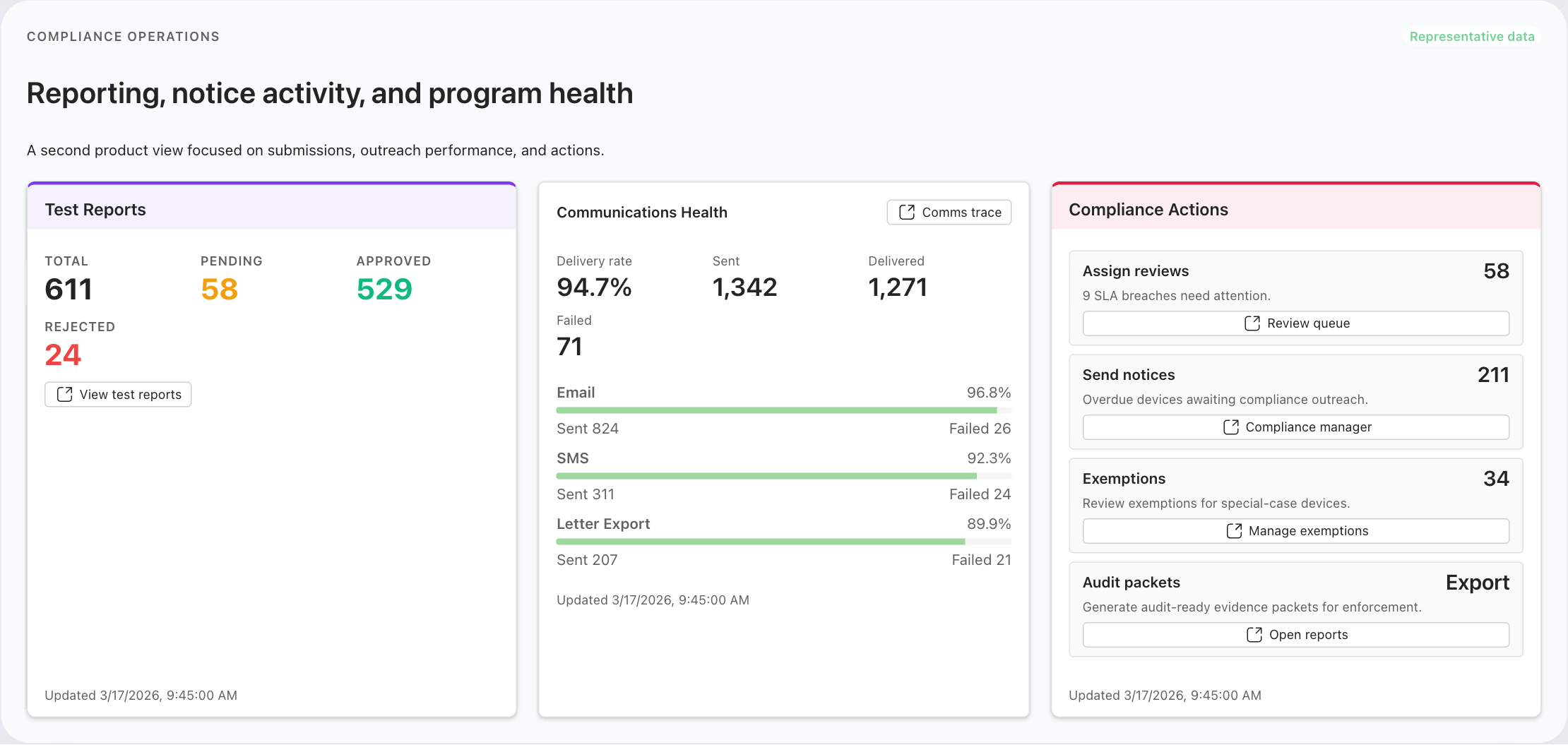
Compliance rates go up when property owners and testers receive timely and relevant communications. Most non-compliance is not intentional. Property owners forget, do not realize the deadline has arrived, or receive a notice without a clear next step.
Why Notifications Drive Compliance
When a utility relies on a single mailed notice or expects property owners to track their own obligations, compliance reflects that passivity. When a utility sends reminders before the deadline, on the deadline, and after the deadline, more property owners act on time.
The mechanism is simple: more touchpoints create more chances to act. A single annual letter is easy to overlook. A clear sequence of reminders is much harder to ignore.
The Three Audiences for Notifications
An effective backflow notification system does not communicate only with property owners. It reaches three different audiences with different message types and timing.
Property Owners and Customers
Property owners are responsible for having devices tested, so their sequence usually includes:
- An advance notice thirty to sixty days before the due date
- A reminder on or around the compliance deadline
- A follow-up notice for non-compliant devices
- A final warning if compliance is still not achieved
Automated workflows can send each step based on current compliance status instead of forcing staff to manually track and trigger every notice.
Certified Backflow Testers
Testers are a critical audience because property owners can only comply if they can reach a qualified tester promptly. Useful tester notifications include certification renewal reminders, calibration expiry alerts, submission confirmations, and flags when a report needs correction.
Internal Utility Staff
Program coordinators also benefit from staff alerts that surface operational issues requiring attention, such as devices moving deeper into overdue status, testers whose credentials have expired, or daily summaries of flagged submissions.
Internal notifications help staff focus on exceptions that need judgment instead of manually scanning the full record set for trouble.
Multi-Channel Communication
Effective notification systems support multiple channels, including email, printed letters, postcards, and in some cases text messaging. The right channel depends on the audience, the urgency of the message, and the utility's communication policy.
A gentle reminder weeks before a deadline should feel different from a formal escalation notice. That flexibility improves response rates and helps utilities communicate more clearly.
Customization and Branding
Notices are more effective when they look and feel like they come directly from the utility. That means using the utility's name, contact information, and language that reflects local policy and enforcement stages.
Tracking and Accountability
Utilities need a complete audit trail of who received what notice, when it was sent, and what response followed. That documentation supports due process when a case escalates and also helps the team see which communications are actually working.
The Compounding Effect on Compliance Rates
The impact of automated notifications is compounding. Higher advance compliance means fewer overdue devices. Fewer overdue devices mean less enforcement work. Less enforcement work gives staff more time for proactive engagement and program improvement.
Getting Started
If your utility still relies on manual notice generation or periodic bulk mailings, the gap between your current workflow and a fully automated notification sequence is probably larger than it appears. Programs that automate notices usually need configurable sequences, event triggers, templates, and a complete communication history for every compliance cycle.